The Weather at Lake Chapala: Sunshine, Dry Air, and the Lake That Keeps It Gentle
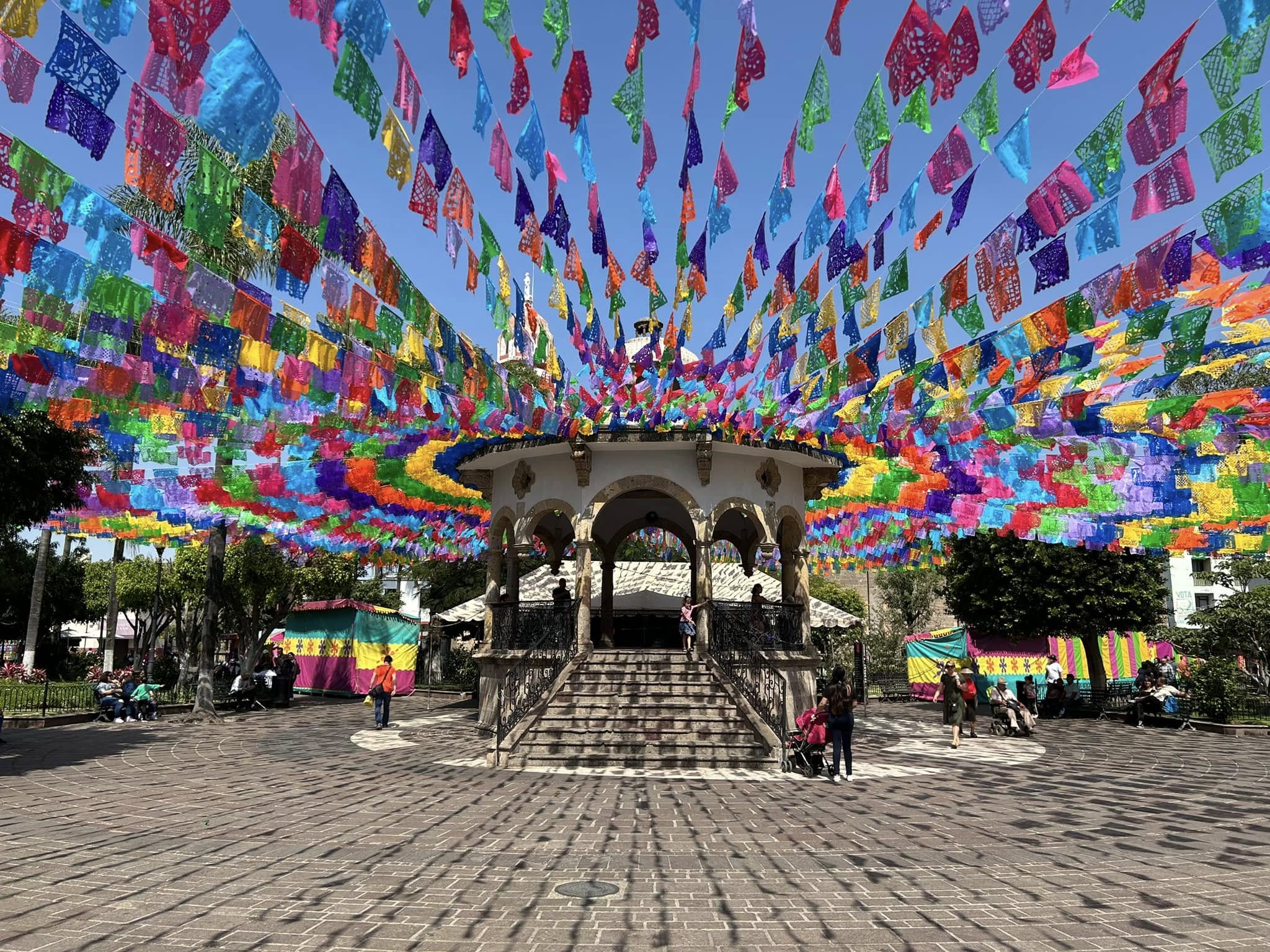
Ask anyone who has moved to Lake Chapala what made them stay, and the weather comes up within a minute. Usually it comes up first. People arrive for the cost of living or the community or a friend who would not stop talking about it, and then one ordinary Tuesday in February they are eating lunch on a terrace in short sleeves, under a sky with nothing in it, and they understand.
Below is what that weather is like across a whole year, with real numbers, because the honest version is better than the brochure. After that comes the why. Once you see how the latitude, the altitude and the lake work together, the climate stops feeling like luck and starts feeling like something you can count on.
The short version
- Afternoons average between about 72°F in January and 86°F in May, the warmest month.
- Nights average between about 52°F and 63°F all year. You sleep with a window open and a light blanket.
- Rain is seasonal. Around 92 percent of it falls between June and October. From November through May the town averages a rainy day or two a month.
- Sunshine is the default. Guadalajara, the closest long sunshine record, logs around 2,670 hours a year, several hundred more than Chicago and far more than Seattle or Vancouver.
- The air is dry for most of the year, so warm days do not feel sticky and evenings cool off quickly.
- Most houses have no heating and no air conditioning, and most people never miss either one.
What the numbers say, month by month
These are the official normals from Mexico's national weather service for the Chapala station, which sits on the lakeshore at about 5,050 feet. Ajijic is a few miles west on the same shore at the same height, and its weather is essentially the same.
| Month | Avg high | Avg low | Rain |
|---|---|---|---|
| January | 72°F / 22°C | 52°F / 11°C | 0.6 in |
| February | 76°F / 24°C | 54°F / 12°C | 0.3 in |
| March | 80°F / 27°C | 56°F / 14°C | 0.1 in |
| April | 84°F / 29°C | 60°F / 15°C | 0.2 in |
| May | 86°F / 30°C | 62°F / 17°C | 0.8 in |
| June | 83°F / 28°C | 63°F / 17°C | 7.1 in |
| July | 79°F / 26°C | 62°F / 17°C | 9.5 in |
| August | 79°F / 26°C | 62°F / 17°C | 7.7 in |
| September | 78°F / 26°C | 62°F / 17°C | 6.4 in |
| October | 78°F / 25°C | 60°F / 15°C | 2.0 in |
| November | 76°F / 24°C | 56°F / 13°C | 0.4 in |
| December | 73°F / 23°C | 53°F / 12°C | 0.3 in |
| Year | 79°F / 26°C | 58°F / 15°C | 35.5 in |
Source: Servicio Meteorológico Nacional, Normales climatológicas 1951–2010, station 14040 Chapala. Fahrenheit converted and rounded.
Look at the high column for a moment. The gap between the coolest month and the warmest is fourteen degrees. In Chicago that gap is closer to fifty. Here, the difference between winter and summer is mostly about whether it rains in the evening, not about what you wear.
Why it is like this
The latitude
Lake Chapala sits at about 20 degrees north, inside the tropics, on the same line as Hawaii's Big Island. The sun stays high in the sky all year and the length of the day barely changes, from roughly eleven hours of daylight in December to roughly thirteen in June. There is no long dark winter here, and no evening in January when the sun is gone by five.
The altitude
A tropical latitude at sea level gives you Puerto Vallarta: beautiful, and hot and humid for much of the year. Lift that same latitude to 5,000 feet and the air is thinner, drier and cooler. The days keep the tropical sun while the heat and the humidity fall away, and the nights cool down properly because thin, dry air does not hold the day's warmth for long. Most of what people love about the climate here is that combination: tropical sun with highland air.
The lake
Lake Chapala has been Mexico's largest freshwater lake since the early seventeenth century. It runs about 50 miles east to west and covers roughly 420 square miles when it is full, which is a great deal of water sitting right in front of every town on the shore.
Water warms and cools much more slowly than land. Through the hot spring months, the lake takes the edge off the afternoon, and on winter nights it gives a little warmth back. The clearest way to see it is next door. Guadalajara sits at nearly the same altitude, about 45 minutes to an hour away, with no lake. Its average May afternoon is around 89°F against Chapala's 86°F, and its days swing further from morning to afternoon all year. Three degrees does not sound like much until you are standing in it in May.
The lake is also shallow for its size, averaging only about 23 feet deep, so it does not act like a deep ocean that holds one temperature all year. It acts more like a very large cooling surface. On many afternoons you can feel the breeze come off the water, and on the north shore, where Chapala, Ajijic and San Juan Cosalá sit with the mountains at their backs, the towns face south into the sun with that open water in front of them.
The sunshine
Guadalajara's long-term record shows around 2,670 hours of sunshine a year, and the lakeshore, under the same sky, gets much the same. For comparison, Chicago gets about 2,500 hours, Seattle about 2,170 and Vancouver about 1,940. The sunniest stretch is the dry spring, with May alone averaging close to 280 hours of sun.
What the numbers do not capture is how the sunshine is spread across the year. Back home, most people get their good weather in a block, and then winter arrives and takes it away for months. Here the bright days are spread across every month. Even in the rainy season, the typical day starts clear and stays that way until the clouds build in the afternoon. Many people find that the steady light changes their mood more than any other single thing about the move. Mornings are easier when the sun is already up and the sky is already blue.
One practical note: the sun at 5,000 feet and 20 degrees north is strong. A hat and sunscreen are part of everyday life here, even on a cool January morning when it does not feel warm.
The dry air
For most of the year, from November through May, the air is dry. Guadalajara's records put the average relative humidity in the high 40s and 50s through the dry spring, and the lakeshore follows the same seasonal pattern. In practice that means an 84°F afternoon in April feels comfortable in the shade, laundry dries on the line in an hour or two, and the evening cools off fast enough that you want a sweater by nine.
The rainy months are a different season. The humidity climbs into the 70s, and the afternoon storms keep things damp. But the temperature drops at the same time, which is why July and August are cooler than May, and the nights stay fresh. It is a green, humid summer at 79°F, not a steamy one at 95°F.
The year as you actually live it
December through February: the dry, cool season
This is when the snowbirds arrive, and it is easy to see why. Afternoons sit in the low to mid 70s under clear skies, and almost no rain falls. Mornings are crisp, sometimes in the upper 40s on the coldest days, and that matters more than visitors expect, because houses here are built of brick and tile with no insulation and no central heat. You will wear a sweater at breakfast and short sleeves at lunch.
March through early June: the warm, dry season
The days lengthen and warm, and May is the hottest month of the year, with afternoons in the mid 80s. The hills dry out to gold and brown, it gets dusty, and everyone starts watching the sky for the first storm. It is the one stretch of the year when a ceiling fan earns its keep. Nights still drop into the low 60s, so even the hottest month here has cool sleeping weather.
Mid-June through September: the rainy season
The first big storm usually arrives in June, and the change is fast. Within a couple of weeks the brown hills turn a deep, almost unreal green and the lake starts to rise. The rhythm of a typical day is simple: a sunny morning, clouds building after lunch, and rain in the late afternoon or overnight, often with thunder rolling across the water. Many long-time residents will tell you this is their favorite time of year, and I understand why. The air smells clean and everything is growing.
October and November: the green dry-down
The storms taper off through October while everything is still green, the skies clear and the temperature settles into the high 70s. If someone asks me when to visit for the first time, this is often what I suggest, because it shows the lake at its most beautiful.
What great weather changes about daily life
People stay for what the weather lets them do every day without planning for it.
Life here happens outside. Houses are built around patios, terraces and covered portales, and many families spend more of the day on the terrace than in the living room. Breakfast is outdoors. Friends come over and sit in the garden until dark. The plaza in Ajijic, like the one in the photo at the top of this article, is full on an ordinary weekday because it is a pleasant place to be on most days of the year.
You walk more. The malecón, the market, the café, the walk home after dinner all stop depending on whether it is too hot or too cold. The Wednesday tianguis in Ajijic happens in the open air almost every week of the year. Something is always in bloom, from the bougainvillea and birds of paradise that flower most of the year to the jacarandas that turn the streets purple in spring, and the hummingbirds follow them.
The weather also changes your budget. With no furnace and no air conditioner, the bills that dominate a household in Minnesota or Arizona mostly disappear. That does not mean utilities are free, and I explain the exceptions in my utilities guide, but the climate is doing a lot of the work.
And it simplifies your life. One wardrobe covers the whole year, with a sweater, a light jacket and an umbrella for the summer. There is no shoveling, no ice on the windshield, and no season you have to get through. Every month has something worth getting up for.
About “the second-best climate in the world”
If you research the area for any length of time, you will read that National Geographic ranked Lake Chapala as having the second-best climate in the world, usually after Nairobi. It is repeated on real estate websites, in relocation guides and at dinner parties.
I am not going to repeat it as fact, because nobody has ever produced the article. Geographer Tony Burton went looking and asked someone with access to the Society's records, who found no mention of Chapala's climate. Columnist Dale Palfrey searched for it in the Guadalajara Reporter in 2016 and came up empty, and Mexico News Daily revisited the claim in 2025 with the same result. As far as anyone can tell, it is a story that got passed around because it sounded right.
It is true that the weather here is among the most comfortable anywhere, and the reasons are in the numbers above. It does not need a magazine ranking, and you will know within a week of arriving.
What to know before you move
- Winter mornings are colder indoors than outdoors. Uninsulated houses hold the night chill. A good blanket, a sunny terrace and a house that faces south make a real difference.
- Roofs need sealing before the rains. Most roofs are flat and rely on a waterproof coating called impermeabilizante. It is renewed every few years, and May is the time to do it, not July.
- Damp closets in the rainy season. Leather and books can pick up mildew in August. Airflow and a dehumidifier in the closet solve most of it.
- The spring is dusty. In the driest weeks before the rains, dust and sometimes smoke from fires in the hills can haze the view across the lake. It clears with the first storms.
- Respect the sun. At this altitude and latitude, wear a hat even on cool days. Visitors who skip it on a January walk along the malecón usually regret it by evening.
If you can, visit twice before you buy: once in May and once in August. May shows you the warmest, driest version of the lake and August shows you the wettest. If you love it in both, you will love it the other ten months too. A season as a renter is even better, and it is the advice I give almost everyone.
A note on the numbers in this article
Temperature and rainfall figures are the Servicio Meteorológico Nacional's 1951–2010 normals for the Chapala station, the official long-term record for the lakeshore. Sunshine and humidity come from Guadalajara's records, because no equivalent long series is published for the lakeshore, so treat them as a close neighbor's figures rather than our own. The Guadalajara comparison uses its 1991–2020 normals, a different period, so read it as a general pattern and not a precise measurement. Comparison cities use their published long-term averages. Any single year can be wetter, drier, warmer or cooler than these averages, and I am a real estate agent, not a meteorologist.
Come and feel it
No article does this justice. The best way to understand the weather here is to sit in the plaza on a February afternoon or watch a summer storm roll across the lake from a covered terrace. If you would like to try it for a season, my rentals are always current, and renting before you buy explains how I would approach it. If you already know this is where you want to wake up, my listings are here, and you can always write to me or send a WhatsApp. I am happy to tell you which neighborhoods catch the morning sun.
Sol Ramirez is a bilingual real estate agent and Rental Manager at Lago Montaña Real Estate in Ajijic. She holds a Diplomado en Derecho Inmobiliario from CEFOR / Cámara de Comercio Guadalajara and has worked in the Lake Chapala region since 2019, covering sales and long-term rentals across the full Lakeside corridor.
Frequently Asked Questions
What is the weather like in Ajijic and Lake Chapala?
Mild and sunny for most of the year. According to Mexico's national weather service, average afternoon highs range from about 72°F (22°C) in January to about 86°F (30°C) in May, and average nighttime lows stay between about 52°F and 63°F (11°C to 17°C) all year. Around 92 percent of the annual rain falls between June and October, so the other seven months are mostly dry and clear.
Does Lake Chapala really have the second-best climate in the world?
The claim that National Geographic ranked it second in the world, usually behind Nairobi, has been repeated for decades, but no one has ever produced the article. Geographer Tony Burton and columnist Dale Palfrey both searched for it without success, and Mexico News Daily called it unsupported in 2025. What is true is that the climate is unusually comfortable: tropical sunshine at about 5,000 feet, with a large lake moderating the temperature.
Why is the weather at Lake Chapala so mild?
Three reasons work together. The lake sits at about 20 degrees north, inside the tropics, so the sun is strong and the days stay a similar length all year. It sits at about 5,000 feet, which takes away the heat and humidity of the coast and lets nights cool down. And Lake Chapala, Mexico's largest freshwater lake, warms and cools more slowly than the land around it, which softens hot afternoons and cool nights on the shore.
How does Lake Chapala affect the local climate?
The lake covers roughly 420 square miles when full, and water changes temperature far more slowly than land, so it takes the edge off the afternoon heat in spring and gives back some warmth on winter nights. Guadalajara, at nearly the same altitude without a lake, averages around 89°F on a May afternoon against Chapala's 86°F, and its daily temperature swing is wider all year. Many afternoons also bring a breeze off the water.
When is the rainy season at Lake Chapala?
Roughly mid-June through September, tapering off in October. July is the wettest month, averaging about 9.5 inches. A typical rainy-season day is sunny in the morning with clouds building after lunch and rain in the late afternoon or overnight. From November through May there is very little rain, averaging less than an inch a month.
Is it humid in Ajijic?
Not for most of the year. From November through May the air is dry, with average relative humidity in nearby Guadalajara's records in the high 40s to 50s through the spring, so warm afternoons stay comfortable and evenings cool off quickly. The rainy months are more humid, around 70 percent, but they are also cooler, with afternoons in the high 70s rather than the 90s.
How sunny is Lake Chapala?
Very. Guadalajara, the closest place with a long sunshine record, averages around 2,670 hours of sunshine a year, compared with roughly 2,500 in Chicago, 2,170 in Seattle and 1,940 in Vancouver. The sunniest month is May. Even in the rainy season, most mornings are clear.
Do I need air conditioning or heating in a house at Lake Chapala?
Most houses have neither, and most residents manage without. A ceiling fan helps in May, the warmest month, and a space heater or good blankets help on January mornings, because houses here are brick and tile with no insulation. Running electric heaters or air conditioning heavily can push a household onto CFE's expensive DAC tariff, so it is worth planning around the climate rather than fighting it.
What is the best time of year to visit Lake Chapala?
October and November are hard to beat: the rains have ended, the hills are still green and the afternoons are in the high 70s. December through February is the most popular season, with dry, sunny days and cool mornings. If you are thinking of buying, visit once in May, the warmest and driest month, and once in August, the wettest, so you know both ends of the year.